GONE WITH THE WIND: REFLECTION
 |
| GONE WITH THE WIND |
The Academy Award-winning film Gone with the Wind provided viewers with an accurate portrayal of the tribulations of the Civil War. The story tells of a passionate yet tragic love story, including details of the Confederacy and its bloody battles with the North. The primary characters, Scarlett O'Hara (Vivien Leigh), Rhett Butler (Clark Gable), Mammy (Hattie McDaniel), and Ashley Wilkes (Leslie Howard), portrayed the customs of the Deep South, societal expectations, and the implications of slavery.
More notably, the publication offered significant observations that can be attributed to the period. Primarily, I observed the dynamic duo held between Scarlett and the family's slave, Mammy. Without the frequent appearance of Scarlett's mother, Mammy undertook the associated responsibilities. This mother-daughter relationship is viewed through Mammy’s direct communication with Ms. O'Hara.
Regarding the main character, Scarlett O'Hara, I thoroughly enjoyed her movie presence and the importance of her character...
She was depicted as an independent and defiant woman, breaking through traditional gender roles and expectations. Scarlet was considered an evolving character, starting off as a love-struck individual and ending in complete self-sufficiency. Initially, the protagonist held romantic feelings for Ashley Wilkes, but they were quickly dismissed with his marriage to Melanie Hamilton. During the movie's conclusion, she was completely detached from the other individuals, viewing the competency of her own skills and thought process. Comprehensively, Ms. O’Hara’s personal strides of evolution persisted amongst the chaos and destruction of the war.
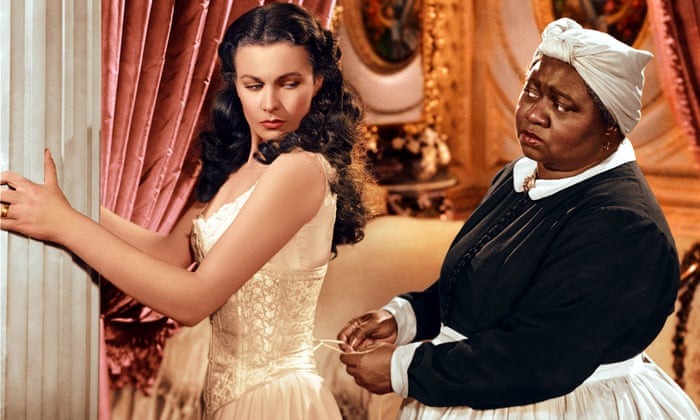 |
| MAMMY AND SCARLET |
Similarly, the wartime experience gave women the chance to shed the “Southern Belle” dependency and showcase their resilience. While men were fighting in battle, women upheld the nation and assumed male-dominated roles. This has been viewed throughout World War 1 and World War 2 as well.
Concerning the Civil War's monetary impact, Scarlett's second love interest, Rhett Butler, heavily profited from the Civil War. These actions were egocentric, disagreeable, and immoral. Conversely, profit stands as the primary purpose of all warfare. Leaders across the world view these harmful interactions as an opportunity to receive financial gains. As a result, this circumstance may be considered common. In the past and even today, certain individuals always find a way to profit from the atrocities of war. Comprehensively, the government's avaricious tendencies were heavily outlined in the class's lectures.
Notably, the film's concepts had a direct correlation to the information taught in Talking About Freedom. Gone with the Wind outwardly showcased the role of slaves amid wartime struggles. These individuals were considered the backbone of society, responsible for upkeeping homes, harvesting food, utilizing their trades, and acting as a family stabilizer. Mammy's character was an adequate portrayal of these tasks and the discredit slaves received from Southern whites.
Additionally, Gone With the Wind showcased the apparent gender roles and beauty standards of the 1860s. Wealthy women's fashion consisted of elaborate ball gowns paired with unique accessories, placing extreme importance and precision on individual beauty. Similarly, men wore complex suits, top hats, and pocket watches.
Overall, I believe that the filmmakers combined an entertaining story with the period's key truths. Gone with the Wind showcased the realities of the Civil War Era and its impact on all Americans, even those who were not yet considered citizens.


No comments:
Post a Comment