Legal Argument for Homer Plessy
Court Case: Plessy v. Ferguson (1896)
SUPREME COURT OF THE UNITED STATES (1896):
- Honorable Chief Justice Fuller and Associate Justices of this Court
- I stand before you today representing Homer Plessy and discussing the case's argument from a legal standpoint. Plessy is a current citizen of Louisiana. My client was wrongfully arrested and convicted for simply sitting in a designated white railway car. This case strikes at the very heart of our Constitution and the fundamental promises made to all Americans through the Fourteenth Amendment.
THE CONSTITUTIONAL VIOLATION:
- Mr. Plessy's arrest under Louisiana's Separate Car Act of 1890 constitutes a clear violation of both our Constitution's Thirteenth and Fourteenth Amendments.
- More critically, this statute violates the Equal Protection Clause of the Fourteenth Amendment, which declares that no state shall "deny to any person within its jurisdiction the equal protection of the laws." The Louisiana statute does precisely what the Constitution forbids—it creates two classes of citizens. These groups are solely segregated on the basis of race and are given two different treatments under the law.
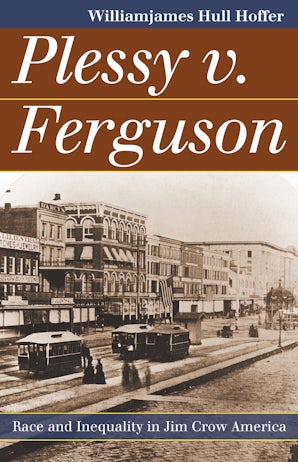 |
RACE AND INEQUALITY |
PRECEDENTIAL SUPPORT:
- More prominently, the Court has already recognized the fundamental principle in this case. In Strauder v. West Virginia (1880), this Court unanimously struck down a state law that excluded African Americans from jury service. The Court declared that "excluding people from juries on the basis of race violated the Fourteenth Amendment." Justice Strong, writing for the Court, emphasized that the Fourteenth Amendment was designed to ensure that "the law in the states shall be the same for the black as for the white.
- If a state cannot exclude citizens from jury service based on race, how can it justify excluding them from railway cars? The principle is identical—both create artificial distinctions based on race that the Constitution prohibits. Therefore, these cases should be treated the same in the eyes of the law.
THE FALLACY OF "SEPARATE BUT EQUAL:"
- The State of Louisiana argues that its law is constitutional because it provides "equal" accommodations for both races. This argument fundamentally misunderstands the nature of equality under the law.
- When a state compels racial separation, it necessarily implies the inferiority of one race to another. The very act of separation marks the separated group as different, as other, as unequal.
- Furthermore, the accommodations provided are not truly equal. The law grants railway companies the power to assign passengers to cars based on their racial determination, often made by conductors with no legal training or authority. This places citizens at the mercy of private actors making arbitrary decisions about their constitutional rights.
THE BROADER CONSTITUTIONAL FRAMEWORK:
- The Civil Rights Act of 1866, passed by the same Congress that would later draft the Fourteenth Amendment, guaranteed all citizens "the same right to make and enforce contracts" and "the full and equal benefit of all laws." This legislation reflects the congressional understanding that the newly freed slaves were entitled to the same legal treatment as white citizens.
- The Fourteenth Amendment's Equal Protection Clause cannot be satisfied by laws that mandate racial separation. Equal protection means that ALL citizens must be treated equally by the state, without regard to race. The Louisiana law fails this fundamental test.
THE PATTERN OF DISCRIMINATORY LAWS - BLACK CODES:
- With the known instability of the defense's claims, I'm confident that they will argue in favor of the Black Codes. The defense will center their argument around the same unconstitutional pattern as the Louisiana Separate Car Act—both seen as attempts at blatant racial discrimination.
 |
THE BLACK CODES |
THE PRECEDENT:
- The case's decision will determine whether our Constitution truly guarantees equal protection under the law or whether states may continue to create legal distinctions based on race. If this Court upholds the Louisiana statute, it will signal that the promises of the Fourteenth Amendment can be circumvented by the mere declaration that separate facilities are "equal."
- Such a precedent would undermine the very purpose of the Reconstruction Amendments and return us to a system where states can legally enforce racial hierarchies, so long as they provide the pretense of equality.
CONCLUSION:
- Homer Plessy was convicted not for any criminal act, but for merely asserting his constitutional right to equal treatment under the law. The Louisiana Separate Car Act violates both the letter and spirit of the Fourteenth Amendment by creating state-mandated racial segregation.
- We respectfully urge this Court to reverse Mr. Plessy's conviction and strike down this discriminatory law. The Constitution demands nothing less than true equality under the law for all citizens, regardless of race.
- The promise of equal protection must be more than mere words on paper—it must be a living reality for all Americans. Thank you.
KEY LEGAL CITATIONS REFERENCED:
- Strauder v. West Virginia (1880) - 100 U.S. 303
- Fourteenth Amendment, Equal Protection Clause
- Thirteenth Amendment
- Civil Rights Act of 1866
- Louisiana Separate Car Act of 1890
AI USAGE: Claude AI conducted proper research and placed the information into script form. I edited the document, adding important information and specifically focusing on the case's legality issues.


No comments:
Post a Comment